
How to Stop Judging Yourself (and Everyone Else)
Learn how judgment distorts reality, disconnects us from the moment and each other.
I used to think I was just opinionated.
That my internal commentary — the critiques, the frustrations, the “I can’t believe they…” monologue — was just me being discerning, self-aware, or even right.
But judgment has layers.
And when I finally stopped trying to justify mine and started listening to it mindfully I found grief. I found longing. And old wounds that were still asking to be witnessed.
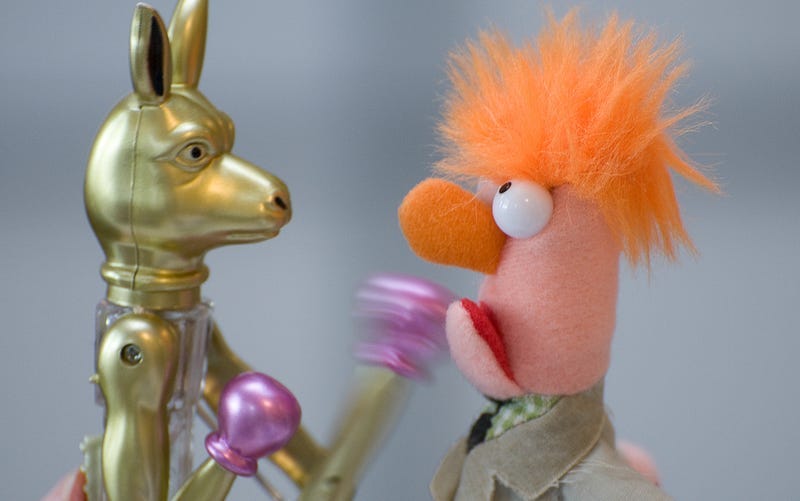
Judgment is one of the most subtle and socially accepted mental habits — and one of the most powerful ways we create separation from our present experience.
Our mind’s role is to help us navigate the physical world — but it does so through the lens of our beliefs. Over time, those beliefs become filters that the mind uses to create a sense of certainty and predictability. Mindfulness invites us to pause and recognize those filters. To ask: What am I actually seeing — and what am I projecting?
Judgment is one of those projections.
Judging isn’t always overt. Sometimes it’s just a quiet, mental dismissal: “Ugh, I’m so emotional today.” Or a casual comparison: “She’s so much more confident than I am.” These micro-judgments add up. They shape how we experience emotions, relationships, even self-worth. And most of the time, we don’t even realize they’re happening.
https://thethirdchoice.substack.com/p/many-faces-of-judgment
What Judgment Actually Does
Every time we label something as wrong, bad, annoying, or even just not good enough, we’re reinforcing a split — a subtle way of saying, “This shouldn’t be here.”
But here’s the thing — whatever’s happening is happening.
The judgment doesn’t change that — it just creates resistance to it. And when we resist what is, we suffer.
“Judgment is the ego’s way of asserting definition: I’m not like that. That’s not me. That shouldn’t be here.”
We judge ourselves for not feeling better. We judge others for making us uncomfortable. We judge situations because they don't meet our expectations — and all of it adds friction to what could otherwise just be felt and released.

What if I could just witness this moment without labeling it?
When we judge, we're not just rejecting the experience — we’re rejecting the part of us that’s having it.
Many of our judgments are inherited. They're passed down by culture, family, or personal history — beliefs like:
“Sadness is weakness.”
“In order to succeed I must have it all figured out.”
“If I feel this way, I must be doing something wrong.”
These definitions create a tightrope we constantly try to balance on. And the moment we fall short — we get emotional, inconsistent, tired, overwhelmed — we self-correct with judgment.
We shame ourselves. We resist how we feel, and get even more stuck in the very patterns we want to change. That’s because judgment is an automatic (learned) response that often masks fear. Or grief. Or the craving for safety, clarity, or connection.
Presence is the mirror.
Reframe the Next Judgment
The next time you hear a judgment in your mind, pause and ask:
Is this a fact or a filter?
What belief is this judgment reflecting?
Can I meet this moment with curiosity instead of critique?
This small pause opens the door back to presence.
Final Thoughts
Judgment narrows the lens of our life. It puts us in a box — and asks the world to fit inside with us. But reality doesn’t live in boxes. It lives in the breath. In this moment. In the raw, unfiltered experience of being human.
You don’t have to stop having thoughts or preferences. But you can choose to loosen your grip on what they mean about you — or anyone else.
Want to keep exploring?
Watch the full episode:
If you’re new here, welcome! This is part of the Emotional Wellbeing Series, where we learn how to build a relationship to ourselves to live more consciously. So far, we’ve been exploring the foundations of emotional intelligence — and now, we’re diving into the next layer of self-awareness, mindfulness.
👉 Whenever you are ready, you can start from the beginning here.
What tends to follow judgment for you — shame, frustration, fear?
What shifts when you replace “What’s wrong with this?” with “What’s here right now?”
I’d love to hear what softened or surprised you after reading — feel free to share in the comments.