
The Most Effective Way to Process Your Feelings
Do you know how or why you feel the way you do? It's time learn how to process your feelings and reclaim emotional clarity.
Sometimes it starts with a tension I can’t quite name, even though it’s familiar. I feel off — a little restless, maybe on edge. My chest feels tight, my stomach unsettled. I can’t tell if I’m irritated or oddly energized, like something’s moving through me that doesn’t quite land. My mind scrambles to explain it:
“Maybe I’m just tired.”
“Maybe I’m mad at them.”
“Maybe I’m being too sensitive.”
But none of those stories really fit.
What I’ve learned is that I’m not just reacting to what’s happening — I’m reacting to the meaning I’ve given it. The sensation lives in my body; the narrative forms in my mind. This post is about how to bridge them.
And why that bridge changes everything.
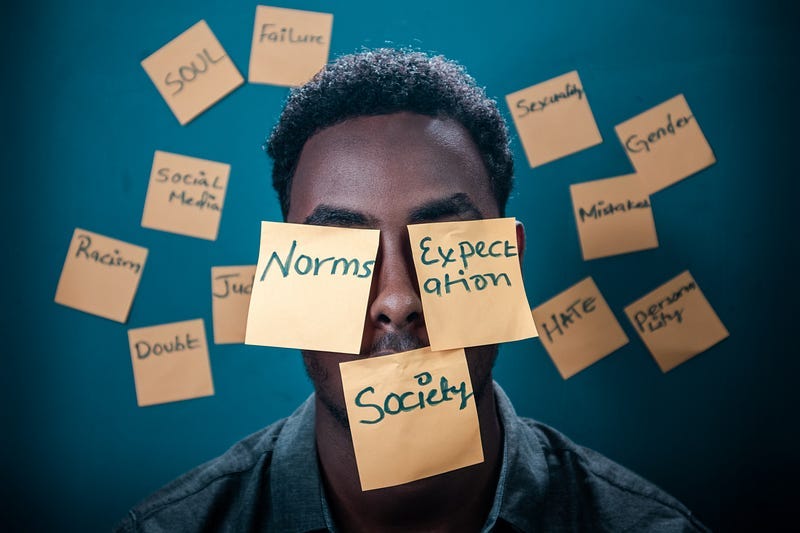
What’s the Difference Between Emotions and Feelings?
Feelings are raw sensory experiences — things you feel before the mind jumps in.
A pounding heart.
Tense shoulders.
Shallow breath.
A tingling in your hands.
A knot in your stomach.
Feelings are direct, vibrational responses to the core of who you are. Think of them as “pre-thought,” body-based, primal, and fast energetic indicators. Feelings are neutral in essence — neither positive nor negative until interpreted.
Animals also do have both feelings and emotions, but the way they experience them is fundamentally different from how humans do, primarily because they do not filter those feelings through a belief system in the same way humans do.
Instead, their feelings are pure, instinctive, and often tied to their immediate environment and the energy around them. They are highly sensitive vibrational translators that can detect changes in energy, weather, emotional fields of humans, etc., and respond accordingly — but without over-analyzing or projecting stories onto those signals.
For example: A dog feels grief when its companion dies, but it doesn’t say, “What does this say about me?” or “I’ll never be loved again.” Instead, it grieves fully in the moment, then returns to presence when the feeling has run its course.
Humans, on the other hand, tend to attach meaning to our experiences. And that’s because the mind wants to explain. Interpret. Make sense. So it wraps those feelings in stories based on our beliefs, memories, and social conditioning. Once these thoughts get energetically charged enough, often through repetition, we began experiencing emotions:
“This means I’m unsafe.”
“This means I’m being rejected.”
“This must be anger. Or fear. Or shame.”
Emotions is the connection created by the mind’s attempt to make sense of the body’s truth.
It’s not always accurate. But it is always revealing.
That’s because your feelings are neutral — they’re just information. But your emotions can shape your entire reality.
Once your mind decides what a feeling means, it reinforces that story every time the body feels something similar. It turns into a pattern. A habit. A worldview.
That’s why two people can have the same emotional response… but spiral into totally different experiences.
“I feel tightness in my chest” could mean:
I’m anxious
I’m excited
I’m unsafe
I’m falling in love
It depends on your context. Your current circumstances. Your beliefs. Your conditioning. Your experiences. This is the power — and the responsibility — of processing your feelings.
How to Process Unpleasant Feelings (without getting stuck in them)
The next time discomfort rises, try this before assigning meaning:
Pause the story.
“My body feels like it’s on fire.” That’s a feeling. Stay with the body. Practice emotional awareness.Ask deeper questions.
What are the thoughts that come up when I feel this way? Do I feel unseen, misunderstood, dismissed?
What meaning am I assigning to this?
What belief is this story tapping into?
Is this meaning aligned with who I think myself to be?
Is this meaning aligned with who I want to be?
Watch for the pattern.
If this is a familiar emotion, is there a story I’m repeating that reinforces it?Check your needs.
Is my body asking for rest, validation, boundaries, expression?Create space, not solutions.
You’re not here to fix the feeling. You’re here to listen to it.


Sometimes your emotions aren’t even yours.
They’re inherited beliefs. Cultural scripts. Childhood definitions of what’s “lazy,” “worthy,” “good,” or “bad.”
Take this example:
You get a gut feeling (feeling) that something is off in a conversation — a subtle vibrational nudge.
Your mind interprets it as “They don’t respect me” based on past conditioning.
The emotion that follows is anger or hurt.
But if your interpretation was instead, “Everyone is on their own journey, and I can express my boundary,” you’d feel empowered or compassionate instead of feeling the need to protect and defend yourself.
Emotion is the side effect of a belief. Change the belief, and the emotional response changes.
Processing vs. Bypassing
In some spiritual or self-help circles, you may hear: “Don’t focus on bad emotions — you’ll manifest more of them.”
But discomfort doesn’t create an undesirable reality. Unacknowledged discomfort does.
Your emotions don’t manifest chaos. They reveal what’s already happening beneath the surface.
You don’t clear them by skipping over them. You clear them by being with them.
Presence = processing.
Bypassing = avoidance dressed up as positivity.
Emotional Regulation Isn’t a One-Size-Fits-All
Sometimes you need to pause and breathe.
Sometimes you need to cry.
Sometimes you need to reframe a thought.
Sometimes you just need a nap.
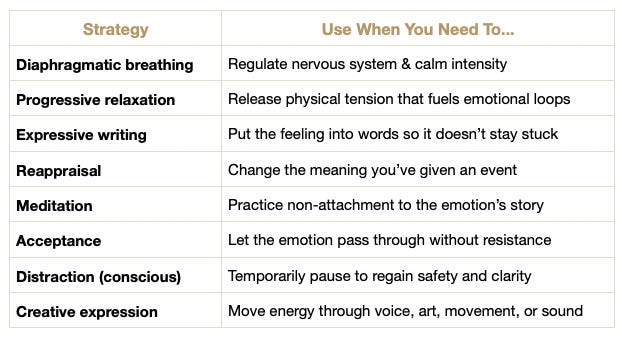
Not every strategy works in every moment. The key is knowing when to rest, when to reflect, and when to express.
Here are a few proven strategies that can accelerate emotional processing:
Final Thoughts
Processing feelings is an art. Not a science.
It’s about choosing to stay curious rather than reactive.
To pause before assigning meaning.
To rewrite the stories you tell yourself about your emotional experiences — and who you are because of them.
When you expand your emotional vocabulary, you don’t just find new words.
You find new choices. And that’s what healing is: creating space between what you feel and how you respond.
Want to keep exploring?
Watch the full episode:
Note: When I first created this video, I held a different definition — I believed feelings were the interpretation and emotions the raw energy. Since then, my understanding has evolved. I now align with the view that feelings are the raw, vibrational signals and emotions are how we interpret those signals through belief. This shift is a perfect example of how awareness transforms experience — even definitions can evolve, and with them, our relationship to life.
Reflect with these Journal Prompts:
What physical sensations do you often mislabel as “bad” feelings?
What beliefs are triggered every time you feel discomfort?
How have your stories about your feelings shaped your emotional habits?
And Remember:
Your emotions aren’t problems — they’re mirrors — that teach you what you’ve agreed to believe, even if unconsciously. Every emotion points to a definition. Change the story, and you’ll shift the world you’re creating.