
The Missing Piece in Your Spiritual Practice
You’re journaling, meditating, even catching your triggers mid-flight. So why do you still feel off? Maybe it’s not awareness you’re missing...
Okay, let’s be honest.
You’re doing the thing. You’re meditating. You’ve got six different journal prompts saved. You’ve identified your inner child, given them a name, and maybe even drawn them a houseplant.
You know the moment your inner critic starts talking smack — and you’ve probably tried to lovingly reparent it with breathwork and lavender tea.
So why... are you still tired?
Still stuck in loops you thought you’d already alchemized?
Still catching yourself reacting, then judging the reaction, then spiraling into a meta-awareness shame cycle?
Spoiler alert: it’s not that your practice isn’t working.
It’s that without balance, mindfulness becomes just another performance.
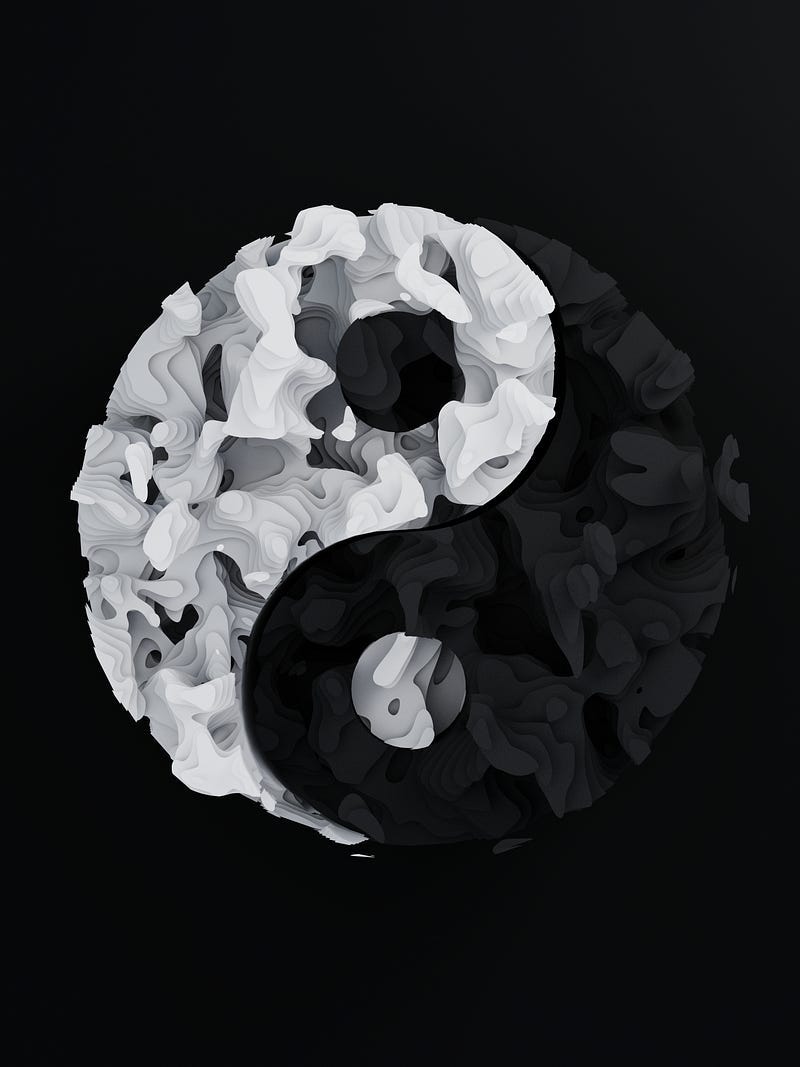
Mindfulness is often treated like a goal: something to master, something to complete. But in truth, mindfulness is more of a rhythm — one you return to, over and over again.
You can’t be mindful all the time, and you’re not supposed to be. Life asks you to move, to feel, to fall asleep and then wake up again. That’s part of the design, so you need to find a middle ground.
Balance isn’t blissed-out perfection that many think it is either, and that’s because you’re never supposed to be “on” all the time. You don’t need to monitor every thought or emotion like a hawk.
You’re not a spiritual surveillance system, you know?
You’re a human. A whole, messy, glorious, meaning-making, cycle-breaking being. And balance is what makes the practice human, too.
Balance says:
You can be aware and forget.
You can have compassion and set boundaries.
You can drop into presence and lose it mid-sentence.
This isn’t about mastering every moment. It’s about returning — without shame — to the part of you that’s awake.
Again. And again. And again.
And maybe again after a salty snack and a small identity crisis. (No judgment, we’ve all been there in one form or another.)
We love to romanticize the awakening — the moment we get it and finally levitate out of our trauma loops like, “Yes, I am now healed. Please hand me my ethically-sourced crystals.”
But the truth is, the loop is the practice.
You’ll forget. You’ll fall asleep. Your ego will try to co-opt your awareness and turn it into a checklist. You’ll catch it. You’ll come back. You’ll laugh or cry or cuss — and that return? That’s the gold, that’s true freedom.

When we talk about conscious living, we’re really talking about reprogramming where your attention goes. Every moment is an invitation:
Do I react?
Or do I respond?
This process isn’t about control. It’s about participation.
You begin to see your ego not as a problem to fix, but as a part of you that’s always scanning for safety, acceptance, and belonging. When you bring balance into your practice, your ego stops trying to run the show and starts working with your awareness instead of against it.
Balance is no longer a static place you reach, but a dance — between doing and being, feeling and integrating, resisting and releasing.
Self-awareness doesn’t always change your experience — but it changes your relationship to it. And that changes everything.
Mindfulness Without Balance Is Just Another Mask
Without balance, you may seem calm, but inside you’re over processing every thought like it’s a toxic ex. You’re “checking in” so hard you forget to just be. You spiritually bypass any experience so you can skip the discomfort in favor of “staying high vibe.”
True mindfulness opens the door to conscious creation. Not in the manifest-what-you-want-with-your-thoughts kind of way — but in the subtle, powerful way of choosing presence over programming.
Of feeling what you feel, without resistance.
Of owning your voice, your timing, your truth, without shame.
And that choice — made again and again — begins to shape your life from the inside out.
Because you don’t need to transcend your human-ness.
You need to include it.
When the world shows you no resolve, the bravest thing you can do is look inward and ask: what is this awakening in me?
So when life offers you conflict, contradiction, or just plain nonsense… mindfulness doesn’t ask you to pretend it’s all okay. Instead, it invites you to respond — with curiosity instead of reactivity. With compassion instead of blame. And to look at what’s being stirred within you so you can meet it without shame.
And when you do? You rise above the emotional gravity of judgment, scarcity, and fear.
That’s the real magic.
Because no one’s coming to save you. But when you shift your attention inward — toward what makes you feel expansive, curious, and clear — you become the kind of presence the world is starving for.
When you stop trying to do mindfulness perfectly and start allowing yourself to be with whatever arises… you begin to notice something deeper.
The patterns you’ve carried.
The stories you inherited.
The way in which you reach, retreat, perform, or protect in your relationships — including in the one you have with yourself.
Mindfulness gives us the space.
But it’s in the looking — in the honest, tender witnessing — that we start to uncover the attachments that shaped us.
That’s where we’re going next.
Want to keep exploring?
Watch the full episode:
If you’re new here, welcome! This is part of the Emotional Wellbeing Series, where we’re learning to build a better relationship to ourselves by living more consciously. We’ve explored the foundations of emotional intelligence — and just wrapped a deep dive into the art of meeting yourself in the moment with mindfulness.
Next, we’re shifting gears into how we learned to connect, protect, and belong with ourselves and others with attachment styles.
👉 Whenever you are ready, you can start from the beginning here.
Which part of your mindfulness practice is more prevalent right now — self-awareness, presence, judgment, resistance, expectations, ego, or self-compassion?
What does it reveal about how you’ve learned to protect yourself — and how are you learning to come home to yourself now?